A bedtime story for a child who is afraid of the dark
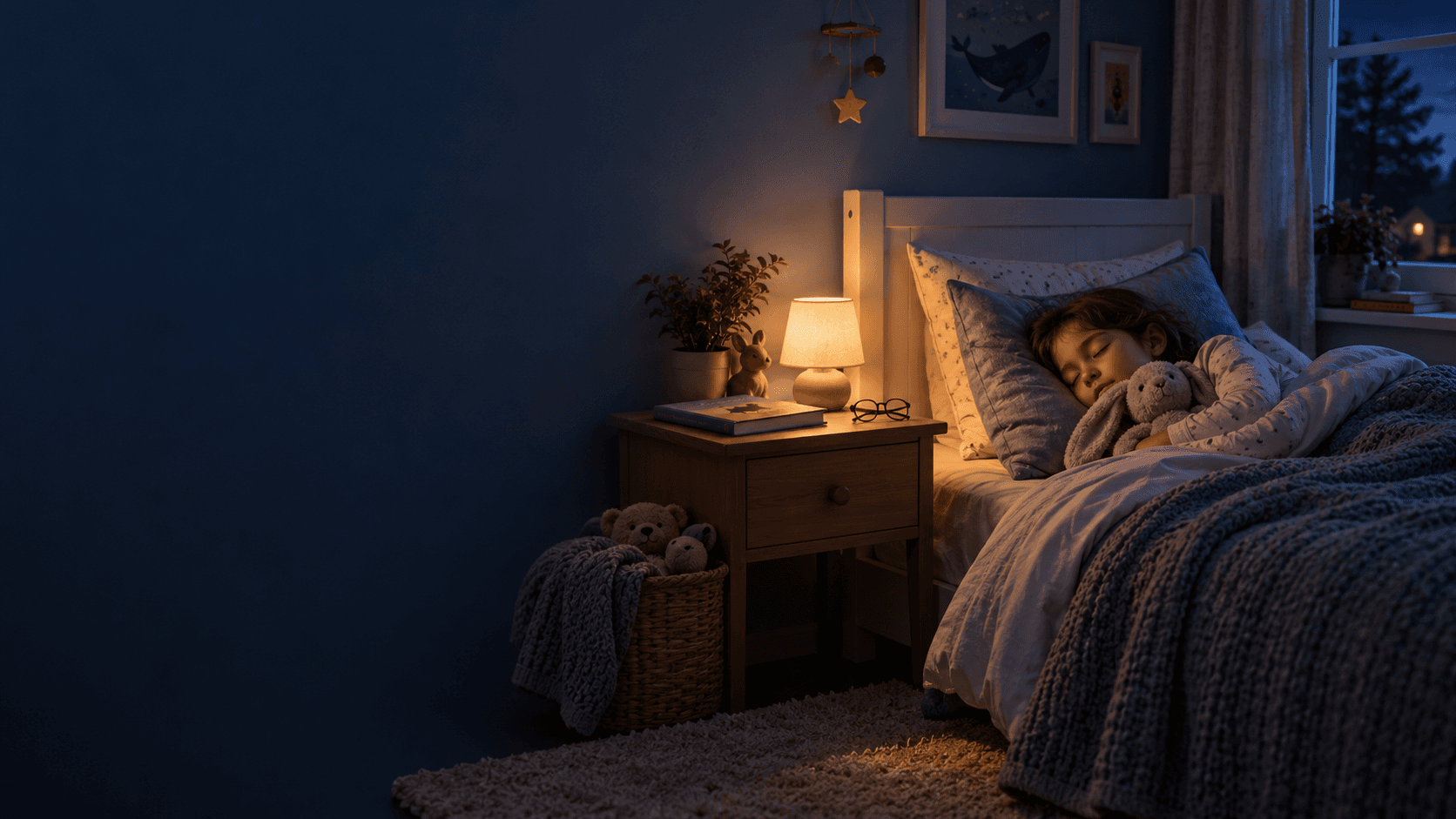
When a child says the dark feels scary, “there’s nothing to be afraid of” may not help them feel understood. A quiet bedtime story can make room for the worry without turning it into a big test of bravery. The point is not to make fear disappear by the last page; it is to help your child feel heard and cared for as the day winds down.
Start by listening before the story
If there is time, ask what part of bedtime feels hardest. Is it the dark, a shadow, being alone, or something they saw or imagined? You do not need to investigate every detail at lights-out. A simple “That sounds scary to you; I’m glad you told me” lets your child know you take the feeling seriously without confirming that something frightening is really in the room.
The American Academy of Pediatrics suggests a predictable nighttime routine with a book and a regular bedtime. A familiar order can make the transition feel less surprising. Its advice for children with nighttime fears also says to let them keep a light on if it makes them feel better: Brush, Book, Bed and its guide to nightmares and nighttime fears.
Build a gentle story in four steps
You do not need a polished plot. A few familiar details are enough to make a short story feel close to your child’s world. Try this simple outline:
- Choose a familiar hero. It could be a curious fox, a brave little train, or a child who likes the same games your child does.
- Name the feeling gently. The hero notices the room looks different after bedtime and admits they feel unsure.
- Add one small choice. The hero can ask for a night light, hold a favorite toy, or invite a trusted grown-up to sit nearby.
- End with comfort, not a challenge. The hero settles with someone who cares. They do not have to prove they are fearless.
For example: “Milo the fox thought the tree branches made strange shapes on the wall. He carried his little lantern to the doorway and called for Grandma. Together they watched the leaves sway, then Milo chose his soft blue blanket and listened to Grandma read one more page.” Keep the details soft and ordinary. Skip surprises, monsters, and anything that might become a new worry once the lights go out.
Let your child help, if they want to
Before the routine starts, offer two calm choices: “Should the story take place at home or in a garden?” or “Would you like the fox to bring a blanket or a tiny lantern?” Some children enjoy helping shape a story; others are tired and would rather listen. Either response is fine. Keep the conversation playful and brief, and save bigger questions about the fear for a relaxed time earlier in the day.
DreamTide Kids lets a parent choose a story hero, setting, length, and optional lesson. A free account can try one personalized discovery story; later story creation requires Premium. If you want the story to reflect choices your child helped make, see our guide to personalized bedtime stories for kids.
Repeat the parts that help
A short routine might be pajamas, brushing teeth, one story, a small night light, then goodnight. If your child asks for reassurance, answer calmly and consistently. You can also check whether a shadow, noisy fan, or unfamiliar object is making the room feel unsettling and adjust the space together. Children vary, and it is okay to use a night light or another comfort while your child grows more at ease.
If fear is intense, persists, or affects your child during the day, talk with your pediatrician for advice tailored to your family. A bedtime story can be a warm ritual, but it is not a treatment or a substitute for professional help.
Common questions
What should a bedtime story say to a child who is afraid of the dark?
Let the character name the fear without being teased or rushed. Give them a small choice, a familiar comfort, and a caring person nearby. Keep the ending reassuring without insisting that the character is never scared again.
Should I leave a light on if my child is afraid of the dark?
If a small light helps your child feel more comfortable, it is reasonable to try one. The American Academy of Pediatrics notes that parents can allow a light if it makes a child feel better.
Will a bedtime story stop my child from being afraid?
A story may offer a gentle way to talk about a worry and share time together, but it cannot guarantee that a fear will go away or make bedtime easy right away. Keep using the support that works for your child and family.
Make room for a softer wind-down
DreamTide is a small, sleep-first app: slow stories, gentle wind-downs, and a layered sound mixer, narrated in soft, real voices, with timers that fade to silence once you’re asleep. 32 soundscapes and stories are free to use without subscribing. A 7-day introductory offer may be available to eligible new subscribers; the offer shown in your app store before purchase controls.